
How to Choose a High Polyphenol EVOO

For decades, the Mediterranean diet has been hailed as the gold standard for longevity and heart health. But the true secret behind this lifestyle isn’t just the consumption of any olive oil—it is the specific use of polyphenol rich olive oil.
Unlike the standard, mild-tasting oils found on most supermarket shelves, a genuine high polyphenol olive oil is less of a cooking fat and more of a natural superfood or daily health supplement. If you are looking to lower cholesterol, fight cellular aging, or reduce joint pain, understanding the science behind these potent antioxidants is the first step.
In this comprehensive guide, we will explore what makes these oils so powerful, the incredible health benefits they offer, and how to find the olive oil with most polyphenols on the market today.
What is High Polyphenol Olive Oil?
To understand what makes this oil so special, we first need to look at the chemistry of the olive tree.
The Science Behind Polyphenols
Polyphenols are naturally occurring micronutrients and bioactive compounds found in plants. In the wild, they act as a defense mechanism, protecting the plant from environmental stress, harsh climates, and oxidation. When we consume these compounds, they offer similar protective, antioxidant benefits to the human body.
In premium Extra Virgin Olive Oil (EVOO), two standout polyphenols do the heavy lifting:
- Oleocanthal: Famous for its powerful anti-inflammatory properties, oleocanthal works on a molecular level incredibly similarly to ibuprofen.
- Hydroxytyrosol: Known as one of the most potent antioxidants found in nature, it is highly effective at protecting cells from oxidative damage.
Polyphenol Count: What Do the Numbers Mean?
Not all olive oils are created equal. The concentration of polyphenols is measured in milligrams per kilogram (mg/kg).
According to the European Food Safety Authority (EFSA) Regulation 432/2012, an olive oil can only legally claim to have heart-health benefits if it contains a minimum of 250 mg/kg of polyphenols (specifically hydroxytyrosol and its derivatives).
- Standard Supermarket EVOO: Usually ranges between 50 to 150 mg/kg.
- High Polyphenol EVOO: Ranges from 250 mg/kg to 500 mg/kg.
- Ultra-Premium / Medicinal Grade: Can range from 800 mg/kg to staggering levels over 1,500 mg/kg.
Health Benefits of Polyphenol-Rich Extra Virgin Olive Oil
The scientific and medical communities have heavily researched the effects of high phenolic olive oil. Here is why health enthusiasts and biohackers are taking it daily.
Supports Heart Health & Lowers Cholesterol
Polyphenols actively protect blood lipids from oxidative stress. Regular consumption helps lower oxidized LDL (bad) cholesterol, improves the elasticity of blood vessels, and helps regulate healthy blood pressure levels, drastically reducing the risk of cardiovascular disease.
Potent Anti-Inflammatory Properties
Chronic inflammation is the root cause of many modern ailments, including arthritis, autoimmune diseases, and heart conditions. The Oleocanthal found in high polyphenol olive oil helps neutralize systemic inflammation without the side effects of pharmaceutical NSAIDs.
Antioxidant Defense & Brain Health
By neutralizing free radicals, polyphenols prevent premature cellular aging. Furthermore, emerging research suggests that these neuroprotective compounds help clear amyloid-beta plaques in the brain, offering promising potential in the prevention of cognitive decline and Alzheimer’s disease.
What Factors Affect Polyphenol Levels?
Finding the olive oil with most polyphenols requires understanding how the oil is produced. A high phenolic count is never an accident; it requires extreme dedication from the farmer.
The Importance of Early Harvest
The timing of the harvest is the single most important factor. Olives must be picked early while they are still green and unripe. Green olives contain the absolute peak levels of polyphenols. However, they yield very little juice, meaning farmers must use significantly more olives to produce a single bottle—which justifies the premium price.
High Polyphenol Olive Varieties
Genetics play a massive role. Certain olive tree cultivars naturally produce higher phenolic yields than others. If you are reading labels, look for these specific varieties:
- Coratina and Moraiolo (Italy)
- Picual and Cornicabra (Spain)
- Koroneiki and Kalamata (Greece)
- Chetoui (Tunisia)
Climate Stress and Cold Processing
Interestingly, olive trees grown in harsh conditions (high altitudes, rocky soil, or induced water stress like those in Moroccan deserts) produce more polyphenols to survive. Once harvested, the olives must be “cold-pressed” (ideally within 2 to 4 hours) and left unfiltered, as excessive heat, water, and filtration destroy the delicate phenolic compounds.
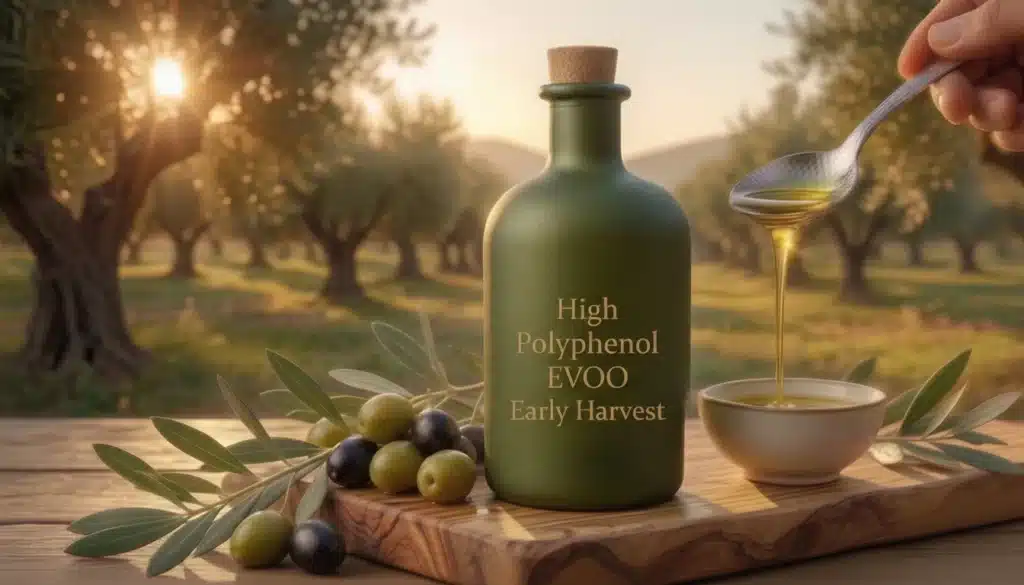
How to Identify and Choose the Best High Polyphenol Olive Oil
Because of the high price tag associated with these superfoods, the market is unfortunately filled with counterfeits. Here is your buyer’s checklist to ensure authenticity.
- The “Cough Test”: Expect Bitterness and Pungency. Forget the mild, buttery oils you are used to. A genuine high polyphenol EVOO will challenge your palate. When you taste it, it should feel bitter on the tongue (a sign of Hydroxytyrosol) and intensely peppery at the back of your throat (the signature of Oleocanthal). This peppery finish usually causes a slight cough—informally known among experts as the “Cough Test.” If it doesn’t make you cough or tingle, the polyphenol count is low.
- Look for Lab Testing and Certifications: Never trust a label alone. The best brands will proudly display a Certificate of Analysis (COA) from an independent laboratory (using HPLC or NMR testing methods) proving their exact mg/kg phenolic count at the time of bottling.
- Packaging and Harvest Date: Light, heat, and oxygen are the enemies of polyphenols. Only buy oil packaged in dark glass bottles, tin cans, or bag-in-box systems. Always check the harvest date; the oil should ideally be consumed within 12 to 18 months of the harvest.
How to Consume and Store Your EVOO
To get the most out of your investment, you must treat this oil differently than regular cooking fat.
Recommended Daily Dosage
Most health professionals recommend taking 1 to 2 tablespoons (15ml – 30ml) daily. The best way to consume it is neat, like a morning “health shot,” on an empty stomach to maximize absorption. Alternatively, use it purely as a finishing oil—drizzle it over salads, soups, or roasted vegetables just before eating.
Storage Tips
Keep your bottle in a cool, dark cupboard away from the stove or oven. Once opened, try to consume the bottle within 4 to 6 weeks, as exposure to oxygen will cause the polyphenol levels to gradually degrade.
Upgrading your pantry to include a polyphenol rich olive oil is one of the most impactful investments you can make for your long-term health. While the robust, peppery flavor and premium price tag might take some getting used to, the clinical benefits for your heart, brain, and cellular longevity are undeniable.
Remember to look for early harvest dates, seek out high-phenolic olive varieties like Picual or Coratina, verify the lab results, and most importantly—trust the “cough test.” By following these guidelines, you will easily find the ideal phenolic oil to support your healthy lifestyle.
Leave a Reply